

Oil drilling is not just about turning a bit and making hole. It is a high-stakes operation with tight timelines, strict safety rules, and major costs that can rise fast. That is why Oil Drilling Project Management matters so much. When you manage the schedule, risks, people, and equipment correctly, you protect your budget and your crew.
In this guide, you will learn what Oil Drilling Project Management is, what phases it includes, the biggest challenges, and the key techniques that help drilling projects succeed—especially in demanding regions like the Permian Basin. This approach aligns with Norton Energy Drilling’s focus on safety, efficiency, and innovation.
What Is Oil Drilling Project Management?
Oil Drilling Project Management is the structured way to plan, lead, and control a drilling project from early planning to well completion. It brings together people, rigs, vendors, and field operations into one coordinated plan.
Good Oil Drilling Project Management makes sure everyone knows the scope, timeline, and safety expectations. It also makes sure the project stays within budget and meets client requirements. In drilling, small mistakes can become big costs, so the project manager’s job is to reduce uncertainty and keep operations moving safely.
What Are the Phases of an Oil Drilling Project?

Most drilling projects follow clear phases. When these phases are managed well, Oil Drilling Project Management becomes predictable and repeatable.
1) Planning and engineering: This includes subsurface planning, well design, and defining drilling objectives. Permits, land access, and logistics planning also happen here.
2) Procurement and contracting: The team secures rig time, services, and materials. Vendor coordination is critical because delays in one item can stall the whole job.
3) Mobilization: The rig, crews, and support equipment move to location. Proper mobilization planning reduces downtime and safety risk.
4) Drilling operations: This is the execution phase. It involves daily reporting, performance monitoring, and fast decisions when conditions change.
5) Completion and handoff: Once the target is reached, completion and testing follow. Then the well is handed off for production operations.
Want to see what “next level” rig capability looks like in practice?
Get a closer look at modern rig performance here:
👉 New Oil Rig, New Heights
What Are the Key Challenges in Oil Drilling Projects?
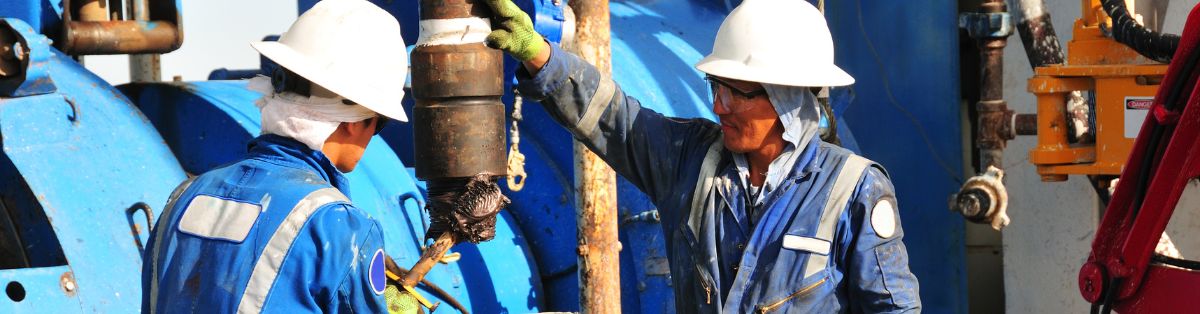
Even with strong planning, drilling is full of variables. Oil Drilling Project Management must handle uncertainty without losing control of time, cost, or safety.
Common challenges include:
- Changing downhole conditions that affect drilling speed and tool performance
- Supply chain delays for parts, casing, or critical services
- Weather and access issues that interrupt operations
- Communication gaps across multiple contractors and shifts
- Rising costs when non-productive time increases
In regions like the Permian Basin, high activity levels can also create competition for rigs, crews, and services. That makes planning and relationships even more important.
Operating in the Permian Basin and want to prepare for the toughest obstacles?
Read the full breakdown here:
👉 Key Challenges in Permian Basin Drilling Operations
How Do Environmental Regulations Impact Oil Drilling?

Environmental rules shape how drilling projects are designed and executed. Strong Oil Drilling Project Management includes compliance planning early, not late.
Regulations may cover emissions, waste handling, spill prevention, water sourcing, and reporting requirements. If teams wait until mobilization to address compliance, they risk delays, fines, or forced changes to the plan.
The best approach is to treat compliance like a core workstream. Build it into your schedule, assign ownership, and verify requirements before services arrive on location.
Need clarity on rules that impact contractor operations and compliance?
Use this guide as your reference point:
👉 Drilling Contractor Regulations
What Are Common Risks in Offshore vs. Onshore Drilling?
Onshore drilling often has simpler logistics than offshore, but it still carries major risk. Offshore drilling typically increases complexity, cost, and exposure to severe weather. In both cases, Oil Drilling Project Management must control risk through planning, training, and strong operational discipline.
Onshore risk examples include transportation incidents, equipment handling injuries, and pressure control events. Offshore risk examples include weather shutdowns, marine logistics failures, and higher consequence events.
No matter the environment, project managers should build a risk register, update it weekly, and make sure mitigations are actually funded and implemented.
Want practical safety steps you can apply immediately?
Start here:
👉 Oil Drilling – Ultimate 7 Safety Tips
What Are Essential Techniques for Successful Oil Drilling Management?
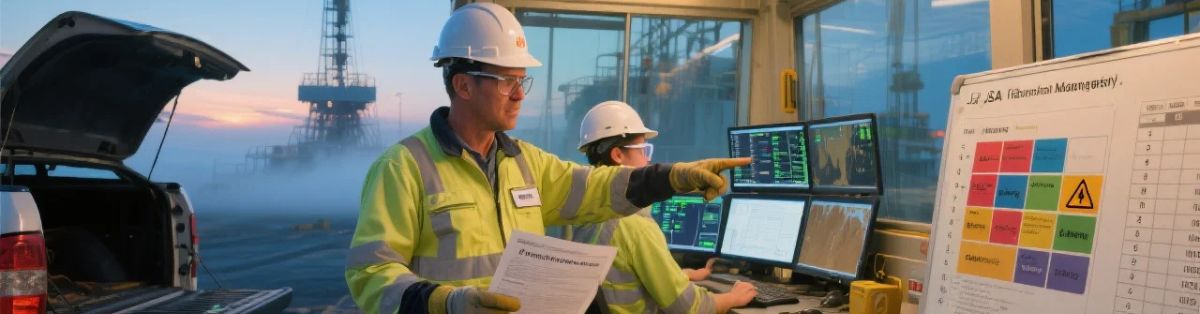
The best drilling results usually come from the same foundation: strong planning, disciplined execution, and learning cycles that improve performance well after well. These techniques are central to Oil Drilling Project Management.
1. Advanced Scheduling and Critical Path Method (CPM)
In drilling, schedule control is operational control. Oil Drilling Project Management teams use CPM to identify the tasks that cannot slip without impacting the entire timeline.
A strong drilling schedule should include:
- Rig mobilization and rig-up
- Drilling sections and casing runs
- Cementing, logging, and BOP testing (as applicable)
- Service company coordination windows
- Contingency time for known risks
If your critical path is unclear, you may optimize the wrong tasks and still lose days. The schedule must be realistic, owned by the team, and updated as conditions change.
Curious how technology is improving drilling speed and precision?
Learn what’s changing next:
👉 The Future of Drilling Technology
2. Risk Assessment and Mitigation Strategies
Risk management is not paperwork. It is daily execution. Oil Drilling Project Management should include risk reviews before the job and during the job.
Key steps:
- Identify risks by category (HSE, operations, equipment, logistics, regulatory)
- Rank them by likelihood and impact
- Assign mitigation owners
- Confirm mitigations are active, not just written down
This approach reduces surprises and lowers non-productive time. It also improves safety outcomes, because risk controls are built into work planning.
Choosing the right rig type can reduce risk and improve performance.
Compare options here:
👉 Types of Oil Drilling Rigs
3. Resource Allocation and Supply Chain Optimization
Drilling projects are only as strong as their logistics. Oil Drilling Project Management must ensure materials and services arrive at the right time, not just “sometime.”
Best practices include:
- Create a materials readiness checklist by well section
- Confirm lead times and backup suppliers for critical parts
- Align service schedules with real rig progress
- Reduce waiting time by improving communication between field and office
If the rig is waiting, the project is losing money. Resource planning is not optional in drilling—it is a profit lever.
Want to see how automation improves coordination and reduces downtime?
Read this next:
👉 Digitalization and Automation for Oil Drilling
How to Implement Effective Cost Control in Oil Drilling Projects?

Cost control is one of the clearest outcomes of strong Oil Drilling Project Management. If you control time, you often control cost. If non-productive time rises, costs rise fast.
To improve cost control:
- Build a budget tied to phases and daily rig costs
- Track spend weekly against forecast, not just after the job
- Monitor non-productive time and root causes
- Set clear approval processes for changes and extra services
Cost control should be visible to the team. When crews understand the cost impact of downtime, they often support better planning and cleaner execution.
Want to understand the financial drivers behind drilling performance?
Start here:
👉 Drilling Economics
What Role Does Technology Play in Cost Management?
Technology supports better decisions, faster. In Oil Drilling Project Management, technology can reduce costs by improving planning accuracy and operational visibility.
Common high-impact areas include:
- Real-time reporting and dashboards for rig performance
- Predictive maintenance to prevent failures
- Automated data capture to reduce manual errors
- Better communication tools to align shifts and vendors
When technology is used correctly, it does not replace people—it helps teams make smarter calls sooner.
What Are Best Practices for Team Leadership and Safety?

Leadership drives execution. Oil Drilling Project Management works best when teams are aligned, trained, and empowered to speak up about safety.
Strong leadership practices include:
- Clear daily goals (safety + operations)
- Consistent shift handovers
- Defined responsibilities across contractors
- Coaching for new team members and new roles
A safety-first culture also improves performance. When crews trust the plan and the leadership, they execute with fewer mistakes and less downtime.
How to Ensure HSE Compliance in High-Risk Environments?
HSE compliance should be built into every step of Oil Drilling Project Management. If safety is treated as a separate activity, it will be forgotten during high-pressure moments.
To strengthen HSE compliance:
- Run pre-job safety meetings with real scenarios
- Use permits and job safety analyses that match actual work
- Audit critical controls (pressure control, lifting, confined space, etc.)
- Track near-misses and fix root causes, not symptoms
This is how you protect people, the environment, and the project schedule.
Want more detail on where safety risks happen during rig operations?
Read this guide:
👉 Safety Risks in Oil Drilling Rigs Operation
How to Measure Success in Oil Drilling Projects?
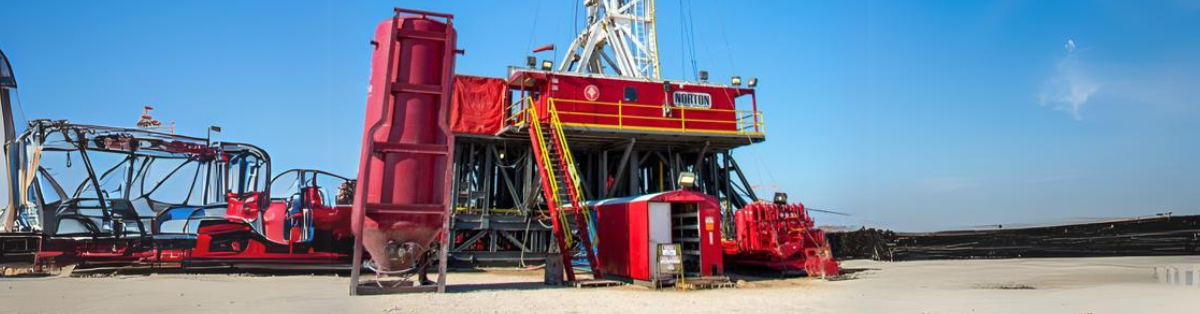
Success is more than finishing the well. Oil Drilling Project Management should measure schedule performance, cost performance, and safety performance together.
A successful project typically has:
- Minimal non-productive time
- Strong safety outcomes (few incidents, strong reporting culture)
- Accurate forecasting and controlled changes
- Smooth vendor coordination and logistics readiness
When you measure performance clearly, you can improve future wells faster and build stronger client trust.
Want ongoing insights into what’s happening in the Permian Basin?
Stay current here:
👉 Permian Basin Oil and Gas News
What KPIs Should Oil Drilling Managers Track?
Tracking the right KPIs keeps Oil Drilling Project Management focused on outcomes, not noise. Consider these core KPIs:
- Non-Productive Time (NPT) and top causes
- Cost per foot and cost per day
- Rate of penetration (ROP) by section
- Safety leading indicators (near-misses, audits completed, training)
- Schedule variance vs. plan
KPIs should be reviewed with the team, not hidden in reports. The goal is improvement, not blame.
More Info: International Association of Drilling Contractors (IADC): https://www.iadc.org
Recent Comments